Bright Heart Font: Infusing Warmth into Your Valentine's Designs
There is a specific challenge that arises every January: how to capture the essence of affection and celebration without falling into the trap of cliché design. We have all seen the standard red and pink motifs, but the typography often lacks the personality needed to make a piece truly memorable. If you are a designer, a small business owner, or a creative hobbyist searching for a typeface that conveys genuine warmth and charm, you may have just found your solution. The Bright Heart Font is not merely a collection of characters; it is a visual expression of the season, designed to bring a festive and adorable aesthetic to your creative toolkit.
Understanding the Personality of This Decorative Display Font
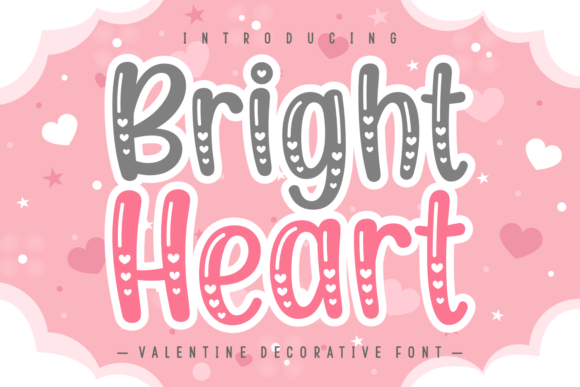
At its core, Bright Heart is a decorative typeface that leans heavily into the Valentine's Day theme. However, to label it strictly seasonal would be to underestimate its potential. Visually, it strikes a balance between playfulness and legibility. It is a premium font that functions best as a display font, meaning it is designed to catch the eye in headlines, logos, and headers rather than body copy. Its letterforms often feature whimsical details—perhaps subtle curves or integrated heart elements—that evoke a sense of joy and affection.
For those working in brand identity, the font’s personality is paramount. Bright Heart communicates a message of approachability and care. It avoids the stiffness of corporate serif font families and the neutrality of standard sans serif font options. Instead, it offers a handwritten font or script font vibe that feels human and organic. This makes it an ideal candidate for brands that want to feel closer to their customers, such as bakeries, florists, boutique gift shops, or artisan crafters.
Bridging the Gap Between Digital and Physical Creation
One of the most valuable assets in a designer's library is a font that transitions seamlessly between the screen and print. The Bright Heart Font excels in this regard. Its modern typography construction ensures that it renders well in digital environments, but its charm truly shines in physical applications.
Consider the world of packaging design. If you are selling chocolates, handmade soaps, or jewelry, the label is your first handshake with the customer. Using Bright Heart for your product name can instantly signal that the product inside is crafted with love and attention to detail. Similarly, for DIY gifts and fabric prints, the font’s distinct silhouette ensures that your text remains a focal point, even when printed on textured materials.
For event planners and individuals, the applications are endless. Think beyond standard text. This typeface is perfect for:
- Wedding Invitations: Setting a romantic tone for save-the-dates and RSVPs.
- Greeting Cards: Creating custom cards that stand out from the generic options found in drugstores.
- Advertising Materials: Designing flyers or posters for local events, bake sales, or seasonal promotions that require a festive touch.
- Merchandise: Printing on tote bags, t-shirts, or mugs where a short, impactful phrase needs to look stylish.
Integrating Bright Heart into Your Brand Strategy
For small business owners and entrepreneurs, typography is a silent ambassador for your brand. Choosing a commercial font like Bright Heart can be a strategic move to differentiate your visual identity. In a crowded market, a unique typeface helps build brand recognition. When customers see that distinctive, heart-inspired lettering, they will begin to associate it with your specific products or services.
However, using a highly stylized font requires a thoughtful approach to maintain professional presentation. You generally do not want to use a decorative font like this for long paragraphs of text; readability will suffer, and the visual impact will be diluted. Instead, use it strategically for impact areas:
- Logo Design: If your brand name is short, Bright Heart can serve as the primary wordmark, especially for lifestyle or seasonal brands.
- Social Media Graphics: Platforms like Instagram and Pinterest are visual-first. Using this font for your quotes, announcements, or sale banners can significantly boost audience engagement. The eye is naturally drawn to unique shapes, and the "cute" factor of the font can increase shareability.
- Websites and Blogs: Use it sparingly for H1 headers or hero text on a landing page to establish a mood, then switch to a cleaner sans serif font for the body text to ensure easy reading.
The Art of Font Pairing and Visual Consistency
A single font rarely works in isolation. To achieve visual consistency across your project, you must master the art of font pairing. Because Bright Heart is a creative font with high personality, it pairs best with something simple and understated.
Imagine a wedding invitation. You might use Bright Heart for the names of the couple to make them pop. For the details regarding the venue, time, and dress code, you would choose a clean, legible serif font or a geometric sans serif font. This contrast creates a hierarchy that guides the reader's eye naturally. The decorative font handles the emotion, while the standard font handles the information.
When testing your pairings, always consider the "voice" of the project. Bright Heart is playful and romantic. If you pair it with a very aggressive, industrial font, the design might feel disjointed. Look for secondary typefaces that share a similar x-height or weight to create a harmonious layout. This attention to detail is what separates amateur design from professional editorial design.
Practical Tips for Using This Creative Asset
Before you finalize your next project with Bright Heart, there are a few practical considerations to keep in mind to ensure the best results.
First, review the included font styles. Many premium typefaces come with variations—perhaps a bold weight, an italicized version, or even a set of swashes and ligatures. These extras can add flair to your typography. For example, a tail on the end of a "y" or "g" can add movement to a logo.
Second, pay close attention to licensing. If you are using this for a personal DIY project, a standard license is usually sufficient. However, if you are a content creator selling merchandise or a business using it in marketing assets that generate revenue, you must ensure you have the appropriate commercial license. This protects you legally and supports the type designers who created the work.
Finally, readability considerations are key. Test your designs at different sizes. A font that looks beautiful on a large poster might become illegible when reduced to the size of a business card. Always print a test proof or view it on a mobile device to ensure the message is clear.
Ultimately, Bright Heart Font