Ignite Your Visuals: The Creative Power of Fire Font
There’s a moment in every creative project where the typography either falls flat or catches fire. You know the feeling: you’ve nailed the concept, the colors are perfect, and the imagery is strong, but the text just sits there, lifeless and generic. This is exactly where a character-driven typeface changes the game. When you are working on a poster, a t-shirt design, or a digital banner, you need lettering that carries as much weight as the graphics themselves. That’s the beauty of finding a typeface with personality—it does the heavy lifting for you, transforming standard text into a visual element that demands attention.
The Art of Visual Storytelling
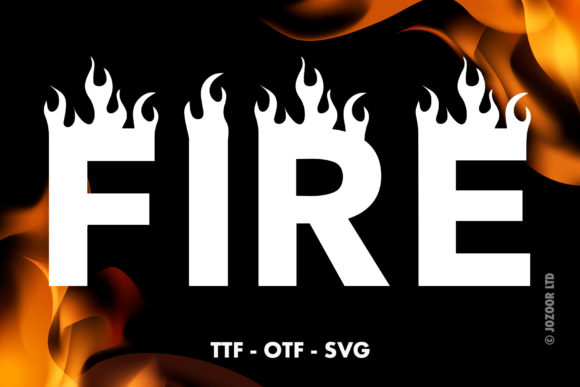
Typography is rarely just about legibility; it is about atmosphere. Think of Fire Font not just as a set of letters, but as a mood board in a single file. The visual characteristics of this typeface are rooted in a blend of edge and elegance. It isn’t just a standard display font; it carries a distinct decorative flair that works exceptionally well for high-impact projects. Whether you are looking for something that feels bold and rebellious or stylish and intricate, this font fills the gap between a standard serif font and a modern sans serif font.
For the small business owner or the creative entrepreneur, visual consistency is the holy grail of branding. You want your audience to recognize you instantly. By utilizing a premium font like this, you inject a specific "voice" into your brand identity. Imagine a coffee roaster using this for their bag labels, or a fitness brand using it for their motivational quotes. The style of the lettering immediately sets expectations about the product inside. It’s a subtle psychological cue that tells the viewer, "We pay attention to the details."
From Screen to Surface: Versatile Applications
One of the biggest hurdles in design is finding an asset that translates well across different mediums. A font that looks great on a website might look muddy on a t-shirt, or a font designed for print might be too thin for social media graphics. This is where the versatility of a well-crafted decorative font shines.
Consider the world of merchandise. If you are designing for print-on-demand or crafting physical goods, the texture of the font matters. Fire Font works beautifully on apparel designs because it has the presence to stand alone as a graphic element. You don’t always need a complex illustration; sometimes, a powerful phrase rendered in a striking typeface is all a poster or hoodie needs to sell itself.
Beyond physical goods, the digital landscape offers endless possibilities. In the realm of web design and blogs, headers are your first impression. Using a creative font for your H1 or H2 tags can break the monotony of standard web-safe typography. It draws the reader's eye down the page, increasing engagement. For content creators and marketers, this is vital. A boring header might cause a user to scroll past, but an intriguing typeface can stop the thumb-scroll on Instagram or Pinterest. It is an essential tool for creating thumbnail graphics that actually get clicked.
Refining Your Brand’s Voice
Choosing the right typeface is a strategic decision. It’s not just about what looks "cool" right now; it’s about what aligns with your project goals. If you are designing an invitation for a high-end event, you need something that feels curated and exclusive. If you are creating a logo for a streetwear brand, you need something with attitude.
When integrating a new asset into your workflow, it is helpful to look at the specific styles included. Many premium font families come with variations—perhaps a bold version for impact, a regular version for body text, or a light version for subtitles. Reviewing these styles allows you to create a hierarchy in your design. For example, you might use the heaviest weight for the headline of a flyer and a lighter, more legible weight for the event details. This ensures your design is not only beautiful but also functional.
There is also the matter of font pairing. A decorative display font is rarely meant to carry the burden of an entire paragraph of text. That is where the sans serif font or serif font comes in. A great practical tip is to pair your expressive headline font with a clean, neutral body font. If Fire Font has a lot of curves and details, pair it with a geometric sans serif like Montserrat or Futura. If it has sharp edges, a rounded sans serif can provide a pleasing contrast. This balance ensures that your message is readable while still maintaining that unique visual flair.
The Business of Creativity
For those working in commercial design, licensing is a topic that can’t be ignored. It is a common pitfall for entrepreneurs to download a "free" font without reading the fine print, only to face legal issues later when they put that design on a product for sale. When investing in a commercial font, you are paying for peace of mind. You are securing the right to use that design asset in your logos, packaging, and merchandise without legal headaches.
Think of font selection as part of your business infrastructure, just like your website hosting or your shipping supplies. A high-quality typeface is a reusable asset. You buy it once, and it serves you across dozens of projects. From the digital ads you run on Facebook to the business cards you hand out at networking events, the font remains a constant thread of your brand identity.
Practical Tips for Implementation
As you start experimenting with this style, keep a few best practices in mind to ensure your work looks professional:
- Test for Readability: Before finalizing a design, zoom out or view it on a mobile device. Decorative fonts can sometimes lose detail at small sizes. Ensure the text is legible in the context where it will be viewed.
- Kerning Matters: Sometimes, decorative letters have unique shapes that sit next to each other awkwardly. Be prepared to manually adjust the spacing (kerning) between letters to ensure the flow looks natural, especially in logos.
- Color and Contrast: A complex font structure often benefits from high contrast. Placing a detailed font on a busy background can make it unreadable. Use solid colors or subtle textures behind the text to let the typography shine.
- Don’t Overuse It: If every single element on your page is a display font, the design becomes chaotic. Use the decorative font for key focal points—titles, headers, or logos—and keep the supporting information simple.
Ultimately, the goal is to make your ideas come alive. Whether you are a hobbyist working on a scrapbook or a professional designer assembling a pitch deck, the tools you choose define the outcome. By incorporating a typeface that has character and depth, you elevate the perception of your work. It signals to your audience that you care about aesthetics and that you are willing to go the extra mile to create something memorable. Fire Font offers that specific blend of style and utility, acting as a bridge between your raw ideas and a polished, professional reality.